Finding the First Black Hole
Student Work (2023)
-
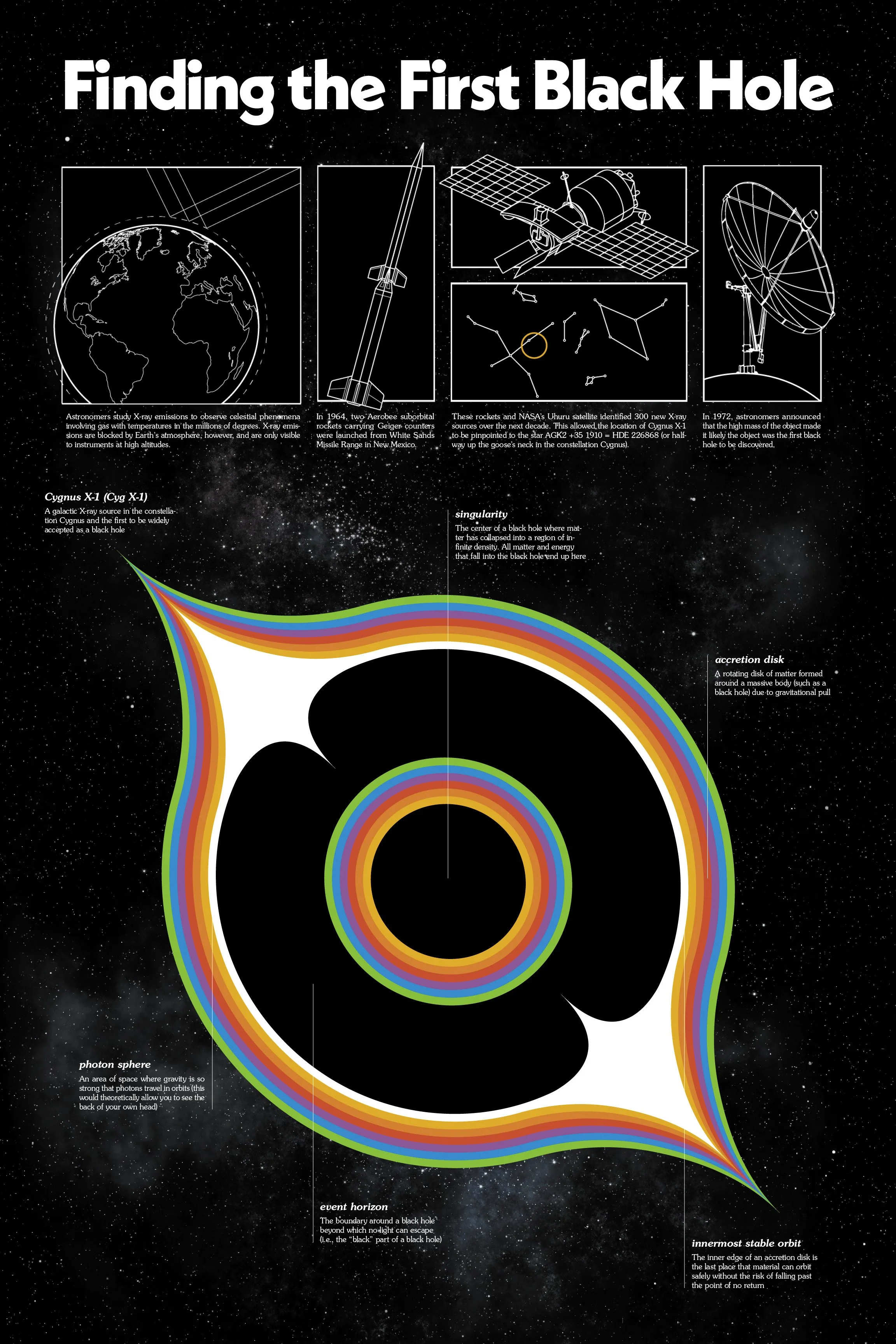
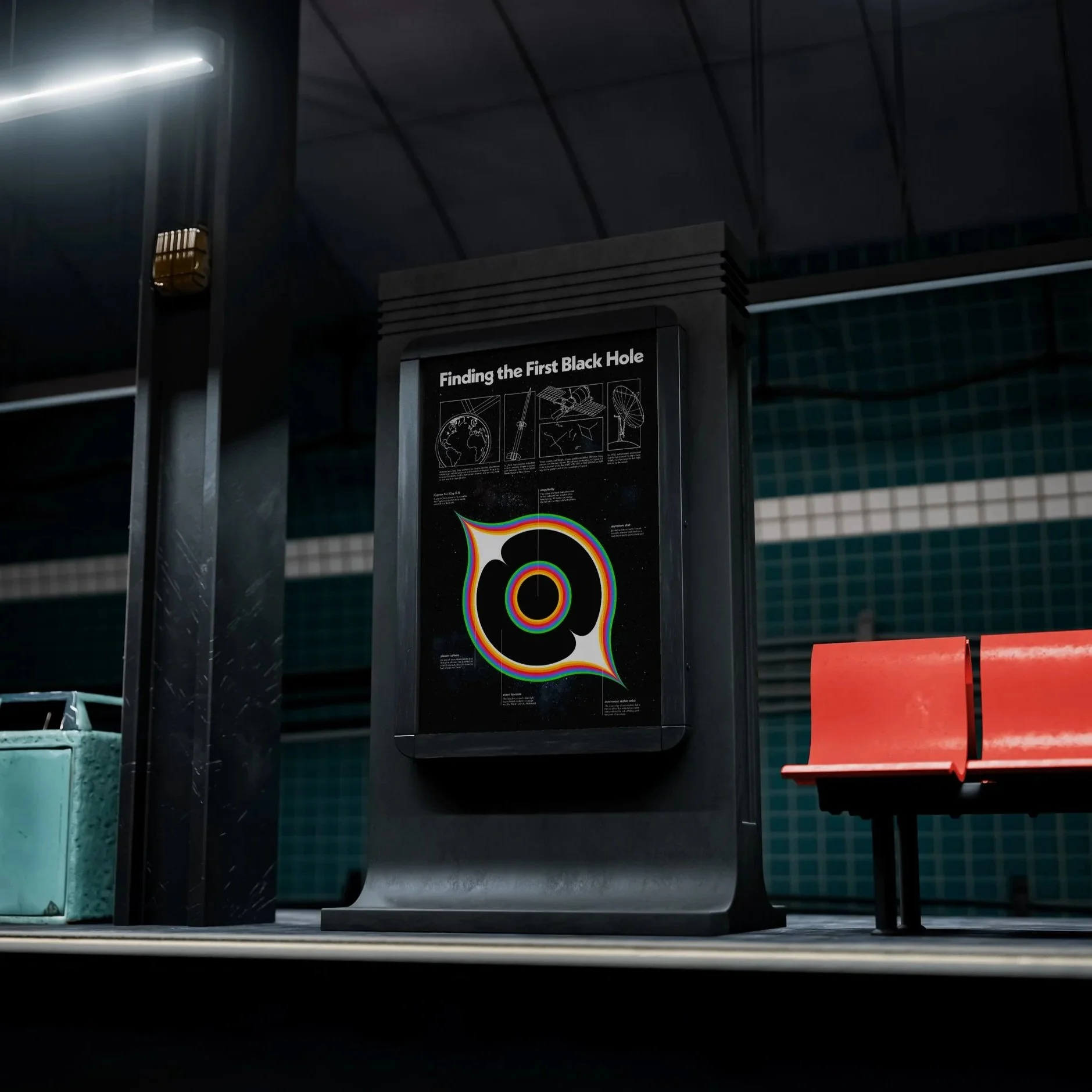
Finding the First Black Hole is an educational augmented reality poster that traces the true story of Cygnus X-1's discovery — the first object widely accepted as a black hole. Blending the technical precision of vintage NASA manuals and 1970s–80s aeronautical illustration with a bold, modern information-design sensibility, the poster uses retro line-art diagrams to walk viewers through the scientific milestones of the discovery, paired with a bold, color-banded illustration labeling the anatomy of a black hole itself (singularity, event horizon, accretion disk, photon sphere, and more). When scanned with a smartphone, the poster's starfield background animates, creating the sensation of approaching the black hole in real time.
-
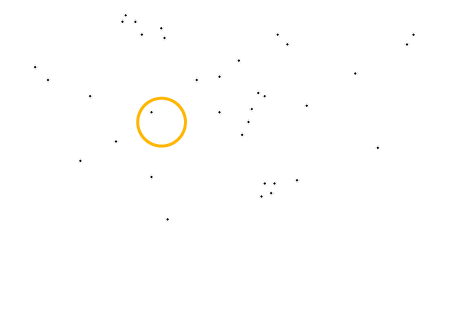
The design process began with research into the historical timeline of Cygnus X-1's discovery, from early X-ray astronomy through the 1972 confirmation announcement, ensuring the narrative panels were both visually compelling and scientifically accurate. Each technical illustration — from the Aerobee suborbital rocket to NASA's Uhuru satellite to the Cygnus constellation itself — was hand-drawn in a detailed, vintage aeronautical style to evoke the era of the actual discovery. Typography played a key role in setting tone, anchored by a bold Futura Condensed ExtraBold headline that nods to retro NASA branding and movie-poster title treatments. The AR functionality was then layered on top of the static design, animating the starfield to simulate motion toward the black hole and adding a layer of interactivity that transforms passive reading into an immersive experience.
-
Finding the First Black Hole demonstrates a research-driven approach to design that remains central to my process today — treating historical accuracy and subject-matter depth as the foundation for visual storytelling, not an afterthought. While the technical illustrations lend period-appropriate texture and credibility to the narrative, the project's real strength lies in its typography and layout: a bold, confident headline treatment, disciplined information hierarchy, and a striking, color-banded black hole illustration that anchors the entire poster. The result is a piece that makes a complex scientific topic immediately engaging at a glance, while rewarding closer reading — proof that thorough research and strong design fundamentals, more than any single stylistic flourish, are what make a project genuinely compelling.